

Winning new clients is tough, and costly. That’s why it’s just as important to look back at the clients you already have. High-performing landscape companies generate 35-50% more revenue from enhancements on their existing accounts, without chasing new leads.
That means the clients you already work so hard to serve are your biggest growth opportunity. This article shows you how to upsell smarter, boost margins, and build stronger, long-term relationships.
And sometimes, what you really need is a bit of inspiration, when to upsell, and which enhancements make the biggest impact. In this piece, we’ll show you exactly how to do it, with clear steps you can start using right away.
Contents Table
- Why Upselling Enhancements Matters
- Step 1: Spot the Right Upsell Opportunities
- Look for signs of risk, wear, or neglect
- Use CapEx triggers to identify timing
- Think across the portfolio, not just one site
- Step 2: Position Enhancements as Solutions, Not Extras
- Link proposals to ROI or cost avoidance
- Use visuals to make the value clear
- Tie enhancements to existing budget categories
- Step 3: Time Your Upsell for Maximum Impact
- Propose during Q3 for budget planning
- Use seasonal needs for urgency
- Use recent wins to build momentum
- Step 4: Close the Deal and Build Momentum
- Track proposals and follow up consistently
- Train teams to surface and pitch ideas
Why Upselling Enhancements Matters
Let’s be direct, upselling enhancements gives you three major advantages:
- Higher margins — Enhancements typically deliver 2-4x the profit of routine maintenance.
- Stronger client relationships — You shift from being “just a vendor” to a trusted property advisor.
- Long-term growth — Enhancements increase property value, boost tenant satisfaction, and keep crews busy year-round.
Enhancements aren’t “extras”, they’re the most profitable part of the business. Base maintenance may keep the lights on, but enhancements drive real growth. By consistently bringing improvement ideas to your clients, you show them you care about protecting and elevating their property, not just maintaining it.
Over time, this approach multiplies the value of each account. A $50,000 annual contract maintained over a decade is worth half a million, but adding steady enhancements can double or triple that figure while also making the relationship much harder for competitors to displace.
Step 1: Spot the Right Upsell Opportunities
The best results come when enhancements are framed as solutions, not sales. That shift in mindset is what separates steady revenue from real growth.
Look for signs of risk, wear, or neglect
Most of the enhancement ideas come from walking properties, and the best account managers group enhancement chances into three strategic categories:
- Safety & liability risks: Drainage failures, poor lighting, or uneven pavement that could cause accidents or tenant complaints.
- Performance inefficiencies: Outdated irrigation systems, aging plantings, or high-maintenance turf that drive up operating costs.
- Aesthetic gaps: Entryways lacking appeal, worn color beds, or landscapes that no longer match the property’s brand image.
When you walk a site, you’re not just looking for what’s broken: you’re scanning for what’s underperforming or holding the property back. Framing these issues as enhancement opportunities shows clients you’re protecting their asset, not just maintaining it.
Use CapEx triggers to identify timing
Capital expenditure (CapEx) is the cycles that create perfect timing for landscape enhancements. These major investments boost property infrastructure and long-term value. Knowledge of your client’s budget planning cycles gives you a significant edge.
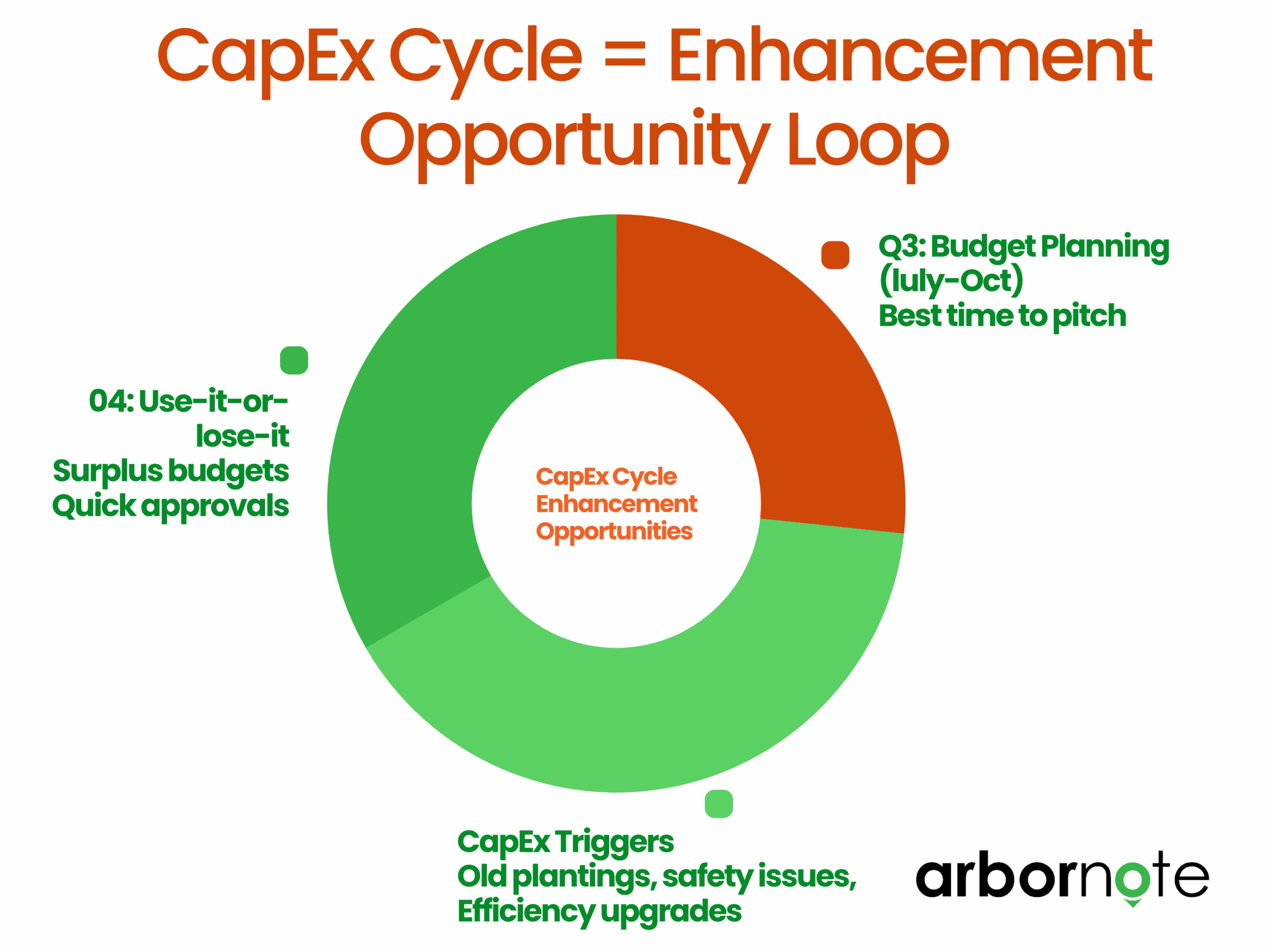
Commercial clients typically plan next year’s budget during Q3 (July-October). Presenting enhancement ideas before this window significantly boosts approval chances. Many properties must spend their “use it or lose it” operating surpluses in Q4 before year-end.
Watch for property CapEx triggers like outdated landscaping, safety concerns, or efficiency improvements. For example, plants installed decades ago in full sun might struggle in now-shaded areas. Shrubs planted 15 years ago in stiff rows might appear dated and overgrown. These situations create ideal enhancement chances.
Think across the portfolio, not just one site
Instead of reacting to problems one by one, it helps to look at the whole portfolio and plan ahead. Here are three reasons that mindset pays off:
Why a portfolio view matters:
- Roadmap, not random jobs: Keep a running list of zones with issues, suggested fixes, and budget ranges.
- Set priorities: Highlight which problems deserve immediate attention, safety risks, high operating costs, or issues that clash with the client’s goals.
- Protect long-term value: Landscapes decline without reinvestment, while well-designed updates can raise property values by up to 20%.
Looking at a client’s properties this way turns enhancement sales from scattered projects into a long-term plan. You’re not just pitching services, you’re guiding strategy. That shift positions you as a trusted partner, the one safeguarding their assets and helping them avoid costly surprises down the road.
Step 2: Position Enhancements as Solutions, Not Extras
Great landscape pros know: the right pitch makes all the difference. Frame enhancements as solutions to property challenges, not extras, and the conversation shifts from selling services to protecting assets.
Link proposals to ROI or cost avoidance
Clients see landscape enhancements as investments when you show clear returns. Studies show thoughtfully designed landscapes can increase commercial property values by up to 20%. Your proposals should focus on benefits that directly affect their profits.
Like a $30,000 parking lot repair can be avoided with proper drainage solutions. Better lighting reduces insurance costs and deters crime. These financial advantages make it easy to get approval.
Commercial clients value improvements that offer multiple returns:
- Higher property values and lease rates boost financial gains
- Smart water use and less maintenance cut operating costs
- Early safety fixes prevent future liability issues
- Happy tenants stay longer
Research shows businesses with expert landscaping can charge more rent, with some spaces earning 7% higher rental income. Tree planting cuts energy costs by reducing heat. Environmentally responsible choices like drought-resistant plants and smart watering systems lower utility bills.
Use visuals to make the value clear
Your clients see the property differently, and they rely on you to bring the vision to life. They often struggle to imagine changes until the work is finished. Clear visuals bridge that gap and turn an idea into something they can confidently approve.
- Scale your visuals to the project: For smaller updates, a quick photo with annotations can be enough. For mid-sized projects, a simple sketch or site map gives context. For large-scale renovations, consider a professional rendering to show the full impact.
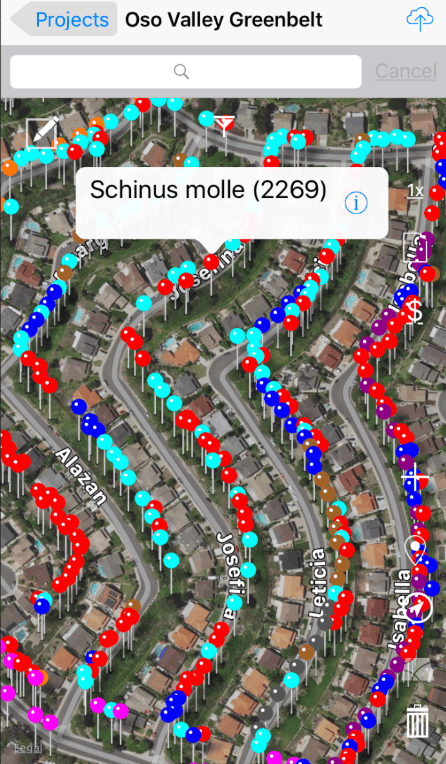
- Use maps and layouts: Showing where trees, plant beds, lighting, and hardscape features fit makes it easier for clients to understand scope, cost, and timeline.
Strong visuals don’t just “pretty up” a proposal: they help clients see the value of your ideas and make faster, more confident decisions. With ArborNote’s landscape maintenance software, you can easily mark zones, add notes, and share a clear plan with clients, making enhancements easier to explain and approve.
Create Professional Enhancement
Proposals with Ease
Visual zone mapping and client-ready proposals
For more information about how to write a winning enhancement proposal, read our last blog about How to grow landscape revenue by 50% with enhancement proposals.
Tie enhancements to existing budget categories
Knowing when clients plan their budgets gives you an edge. Your enhancements should fit their current budget categories: maintenance, capital improvements, or risk management.
Framing enhancements within categories like capital improvements or risk management makes approvals easier. This builds trust and shows your dedication to the relationship. Your proposals should also line up with their budget categories. This helps property managers justify and approve the investment easily.
Step 3: Time Your Upsell for Maximum Impact
Smart timing can boost your chances of getting property improvements approved. Successful landscape professionals know the timing of your presentation matters just as much as the actual proposal.
Propose during Q3 for budget planning
Based on the CapEx we mentioned above, commercial property usually plan next year’s spending during Q3 (July-October), and they often put landscaping in it. Your enhancement ideas need to reach clients before this significant window. This gives them time to include your proposals in their annual planning. You need to get in front of your clients prior to their budgeting cycle, and present future enhancement opportunities, so they have time to send those ideas up the ladder to the decision-makers.
Clients who have already set their budgets may need to wait until the next cycle, even if your ideas make perfect sense. That’s why it helps to focus first on the issues most connected to their goals and priorities. When you understand a client’s broader vision for the property, you can guide decisions that make sense today, while also shaping a clear plan for future improvements.
Use seasonal needs for urgency
Paying attention to business trends is important, but so is keeping an eye on nature’s cycles. These cycles create natural moments to suggest improvements. Winter damage, spring growth flushes, summer heat stress, and fall cleanups are great opportunities to suggest relevant improvements. Outdoor design and installation usually requires four to six months from concept to completion, so proper conversation timing is vital.
Contractors get harder to book during peak season (Spring through Fall). Your clients should secure contractors in fall or winter to ensure spring installation, especially with longer wait times these days. This strategy positions you as a trusted advisor rather than just another service provider.
Use recent wins to build momentum
Face-to-face meetings are a great way to get enhancement conversations going.
The completion of one enhancement project opens the door to discuss the next priority. Clients who see problems firsthand (like broken lighting or irrigation issues) approve additional work more readily than through email proposals.
Detailed records of client interactions and enhancement suggestions prevent duplicate offers. These records help track which improvements interest each client most. A free landscape assessment often reveals multiple opportunities while showcasing your expertise and attention to detail.
Step 4: Close the Deal and Build Momentum
Sales teams need regular check-ins and teamwork to close landscape improvement deals. Top companies create systems that convert sporadic sales into steady revenue.
Track proposals and follow up consistently
Your proposal deserves attention, make sure it doesn’t get lost in a client’s inbox.
Send a brief professional check-in within 3-5 days after submitting your proposal. A well-laid-out process works best: send an email after 3-5 days, make a call after 7-10 days, and share something interesting about the industry after 14-20 days. A CRM helps you track these touchpoints and prevents deals from slipping through the cracks. Companies that monitor vital metrics like weekly contact numbers, proposal values, and close ratios get a clearer picture of their sales pipeline.
Our landscape maintenance software creates clear, visual proposals with all the details your clients need. You can send them directly from the app, saving hours of back-and-forth. The result: smoother upsells and more confident approvals.
Streamline Your Enhancement
Sales Process
Track proposals and follow-ups automatically
Train teams to surface and pitch ideas
Of course, even the best system only works if your team helps surface the opportunities. Your field staff are often your best salespeople for enhancements. They’re on the property every day, building client trust and spotting opportunities others might overlook.
To unlock that potential, give them training that combines technical landscape skills with basic communication abilities. A crew member who can confidently explain a problem and suggest a fix adds huge value.
Some companies go further by setting sales targets or incentives for enhancement opportunities. It’s a simple way to motivate staff and drive extra revenue.
For larger operations, once enhancement work reaches about $500,000 annually, it can even make sense to create dedicated improvement crews. This keeps projects moving smoothly and frees up your maintenance teams.
Conclusion
Upselling enhancements isn’t about pushing extras, it’s about protecting and improving a client’s property. Focus on existing accounts, where growth costs less and margins run higher.
Keep it simple: spot issues, frame them as solutions, pitch at the right time, and follow through. When your whole team plays a role, small wins turn into long-term partnerships.
In the end, great landscape companies don’t just maintain properties, they make them better. And if you’re out there walking sites, juggling crews, and keeping clients happy, you’re already doing the hard part. These strategies help you capture more of the value you’re already creating.