

What if you could increase revenue by 35-50% without finding a single new client?
In commercial landscaping, that’s exactly what enhancements can do. High margins, minimal competition, and clients who come back year after year make enhancements irresistible. Enhancements are targeted upgrades that improve a property’s look, function, and value, without extra marketing.
But knowing enhancements are profitable and actually closing them is a different story.
In the upselling process, what property managers are really interested in is how a landscape partner makes their job easier.
That’s why a good enhancement proposal is important. They need to look good and professional, but more importantly, they need to address the current client issues, and become the final mile that bridges the gap between ordinary properties and showpieces.
This guide explores landscape enhancement, and how to build enhancement proposals that clients actually get excited about. Let’s dive in!
Contents Table
Understanding Landscape Enhancement
How it Differs from Design-Build One
Think of landscaping like building a house.
Design-build projects are full renovations, tearing down walls, and pouring new foundations. Whereas enhancement focuses on the smart upgrades that make a property from good to great, like fixing that drainage nightmare, or adding outdoor lighting.
But don’t get it wrong. For commercial properties, these aren’t just cosmetic touches. They’re investments that directly impact their bottom line: higher occupancy rates, fewer safety incidents, happier tenants, and better property values. That drainage fix prevents a $50K parking lot repair. That lighting upgrade drops their insurance premiums. That enhanced entrance helps them land the tenant they’ve been courting.

The existing relationship makes enhancements easier to approve and implement. Projects move faster, and budgets stay flexible. You can spot issues, offer solutions, and fix problems quickly without 0to1 bidding.
Account managers start by meeting clients to discuss needs and develop ideas. A detailed proposal follows with cost estimates and visual aids. Projects usually start two to three weeks or even shorter after approval, once materials arrive.
What Qualifies as a Landscape Enhancement
Landscape enhancements cover any services beyond your standard maintenance contract. These projects improve a property’s functionality, safety, or aesthetic appeal and usually take a shorter working period.
Common types of landscape enhancements include:
- Safety enhancements: Fixing trip hazards, improving visibility, repairing hardscape issues, and addressing drainage problems, etc. This one usually doesn’t take a long time and the proposal can be as simple as description and site photo.
- Functional improvements: Solving drainage and irrigation issues, controlling erosion, and creating usable outdoor spaces. These often require a more detailed scope of work and clear phasing in the proposal, since they may involve multiple trades or extended timelines.
- Esthetic upgrades: Installing seasonal flowers, updating mulch, adding ornamental trees, and implementing outdoor lighting. Proposals for these tend to focus on visuals: before/after photos, color renderings, or plant palettes, to help the client picture the transformation.
- Maintenance extensions: Core aeration, sod replacement, and specialized plant care. Proposals should note timing, frequency, and before/after photos to align with the existing schedule.
- Sustainability features: Mulching to reduce water consumption, installing solar lighting, and adding native plantings. Proposals can highlight cost savings, and similar project examples.
Commercial clients see enhancements as investments in property value. Real estate studies show well-designed landscapes can increase property value by up to 20%. These improvements often boost tenant satisfaction, which can lead to higher lease rates and less turnover.
Key Elements of a Winning Proposal
The list below reflects the essentials of a full proposal. Matching with different enhancement types above, not every element will be necessary, but the bigger the project is, the more encompassing it needs to be, here are the most important six elements, so you have a complete reference to draw from.
Executive summary and company background
The key stays consistent, just like we covered in our tree care proposal guide, be empathic with professionalism. Show your client you’ve heard their concerns and understand their questions. The executive summary is your chance to prove you’ve been listening.
The most effective summaries have:
- A clear confirmation of your client’s main concerns
- A brief outline of how your team will address them
- An estimated timeline and project cost range
If space allows, you can also add a short note about your company’s mission, vision, and values. Remember: the executive summary decides whether the client keeps reading. Make it compelling, concise, and focused on them.
Scope of work with clear deliverables
This is the backbone of your proposal. Your scope of work should be complete and available to understand. This section must outline exactly what the client gets and which specific property areas will see improvements.
Many companies start with a “base scope” in the first proposal to create a standard estimate. It also helps to not price yourself out of the market. If the client wants to dig further into the work, you can always add on when discussing pricing.
Good scope sections have:
- Detailed descriptions of services (e.g., plant installation, irrigation, hardscaping)
- Specifications for materials and plants
- Clear boundaries of what’s included and what’s not
Specific deliverables matter most. Unclear promises create misunderstandings and disappointment.
Cost estimates and optional upgrades
Industry data shows this section gets the most attention from potential clients. Your pricing section should be as clear as your scope of work. In enhancement proposals, the two often go hand-in-hand, tying each improvement directly to its cost makes it easier for clients to see the value and understand their options.
A strong pricing breakdown includes:
- Itemized costs for each proposed enhancement
- Options at different price points
- Price ranges for common landscape upgrades
Offering tiered options gives clients flexibility and often opens the door to a larger project scope. When they can see the cost-benefit clearly, upgrades become much easier to approve.
Timeline and Expected Result
This is where your proposal can wow the property managers. They want noticeable, tangible results, something they can picture right away, that show exactly what your team can deliver and how quickly it can be done.
Outlining project phases helps them visualize the outcome, understand the timeline, and prepare for any short-term disruptions. The faster they can connect your proposal to real improvements on their property, the faster you’ll get the green light.
Visuals: maps, photos, and renderings
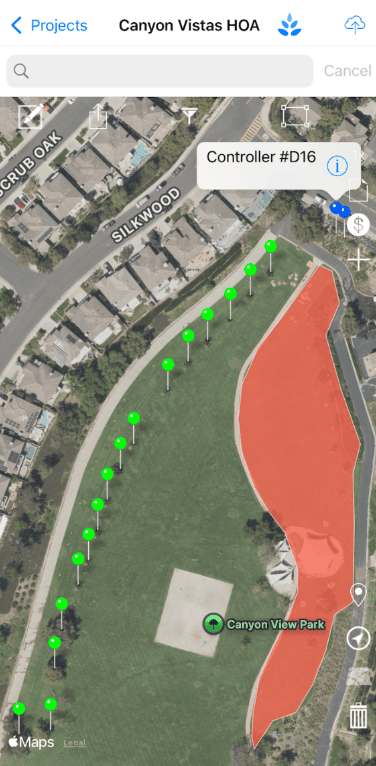
Visual elements turn ordinary proposals into compelling presentations. Many companies use site maps that show property features like trees, bushes, and hardscape elements.
The visual tools help clients see the transformation. visuals make the transformation tangible and help property managers quickly understand your team’s value and timeline. They turn abstract ideas into something they can picture, and approve, faster.
Creating a clean site map used to take hours, but this is where ArborNote takes a huge load off. Our Landscape Maintenance Software lets you not only pin enhancement areas, but also draw shapes directly on the property map, perfect for outlining new beds, turf replacement zones, or hardscape additions. Then, preview the plan and email it to your client in minutes, so you can focus on the high-level management.
Terms, warranties, and payment schedules
In your enhancement proposal, outline the payment schedule, deposit requirements, and warranty details up front. Many companies offer a limited warranty on enhancement work, with the coverage period depending on the upgrade and materials used. This not only sets expectations but also builds trust with your client from the start. Here is an example.
Payment terms should be just as clear. For example, it’s common to request a 50% deposit for projects over $1,000, with the balance due upon completion. Your warranty section should also spell out exactly what’s covered, and what’s not, such as damage from improper care or unauthorized changes to the work after installation.
These six key elements create proposals that inform and persuade. Your company will stand out from competitors who rely on simple estimates alone.
Create Professional Proposals
In Minutes, Not Hours
Map enhancement areas with precision and email instantly
Avoiding Common Proposal Mistakes
Even with these six elements in place, proposals can still fall short if they’re presented the wrong way. Too vague, too technical, too self-focused, these common mistakes can sink a solid plan before it gets a chance.
Next, let’s look at the most common mistakes that can undermine an otherwise solid proposal, and how to avoid them.
Overpromising deliverables
Your credibility suffers when you set unrealistic expectations, and this hurts your relationship with clients. Companies often overpromise because they feel pressured to win contracts despite not having enough equipment or workers. This is also the reason why we mention in the above part that many companies use “base scope” and price range in the first proposal version. It can raise ethical issues and can damage your company’s reputation by a lot when you fail to deliver.
Nothing erodes credibility faster than setting expectations you can’t meet. It’s tempting to promise big to win the work, especially if you’re up against a competitor, but without the crew and equipment, you face financial pressure through outsourcing costs, equipment rentals, or paying off unhappy clients. And once trust is broken, it’s far harder to win back than any single job.
This is also the reason why many companies use “base scope” and price range in the first proposal version as outlined in the key elements. Keep your commitments rooted in reality, and use your proposal’s structure to back them up:
- Phase your projects: Break large jobs into smaller steps with timelines that match your actual capacity.
- Set the tone early: Use the executive summary like we mention above to confirm priorities, outline your approach, and be upfront about timing.
- Be precise in scope: Clearly define what’s included and what’s not, so there’s no room for false assumptions.
- Tie pricing to deliverables: Align costs with each enhancement so clients can see exactly what they’re paying for.
- Show, don’t just tell: Use visuals, like ArborNote maps, photos, renderings, to make outcomes tangible and avoid misinterpretation.
When every section of your proposal reinforces realistic, clearly defined deliverables, you don’t just avoid overpromising, you build trust, win approvals faster, and protect your margins.
Ignoring visual presentation
If the visuals don’t help the client see the change, they’ll have a harder time understanding the value, and a harder time saying yes. Professional visuals not only make changes easier to grasp, they also build trust in your work.
The Landscape Institute identifies four main visualization types, from simple annotated photos to detailed photomontages. Match the level of detail to the scale of the project, larger, more complex improvements deserve more polished presentations.
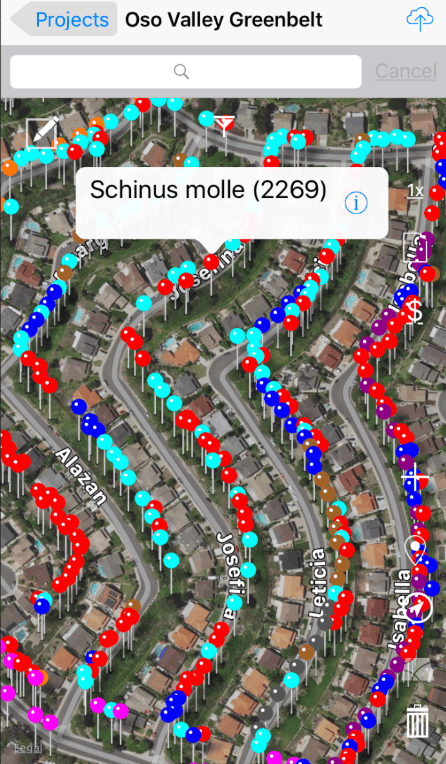
With our Landscape Maintenance App, you can create those visuals in minutes. Pin trees or enhancement areas, apply reusable kits so you’re not marking the same elements over and over, and calculate quantities automatically from the shapes you draw. It’s faster for you, clearer for the client, and far more professional than a rushed PDF.
Missing a clear call-to-action
One of the easiest ways to lose a project is to leave the client wondering, “So… what happens next?”
Without a clear next step, even the most polished proposal can stall, lost in an inbox or under competing priorities. One effective approach, as we covered earlier, is to outline the expected result in its own dedicated section. Another way is an ending that moves the client to act.
Studies show that a single, well-placed call-to-action can boost clicks by 371% and sales by 1,617%. Use action-focused language that encourages immediate response, and place CTAs where they can’t be missed, especially at the end of your proposal. Make them stand out with color, size, or formatting so the client’s eyes naturally go there first.
Enhancements are more than just “extras” tacked onto a maintenance contract, they’re high-value, high-impact projects that can transform both a property and your bottom line.
But winning them takes more than knowing they’re profitable. It takes a clear, compelling, client-focused proposal. Nail the six key elements, avoid common mistakes, and use tools like ArborNote to deliver with ease, and you’ll be the partner clients trust and return to, season after season.
Transform Your Enhancement
Proposals Today
See how professional mapping drives more approvals