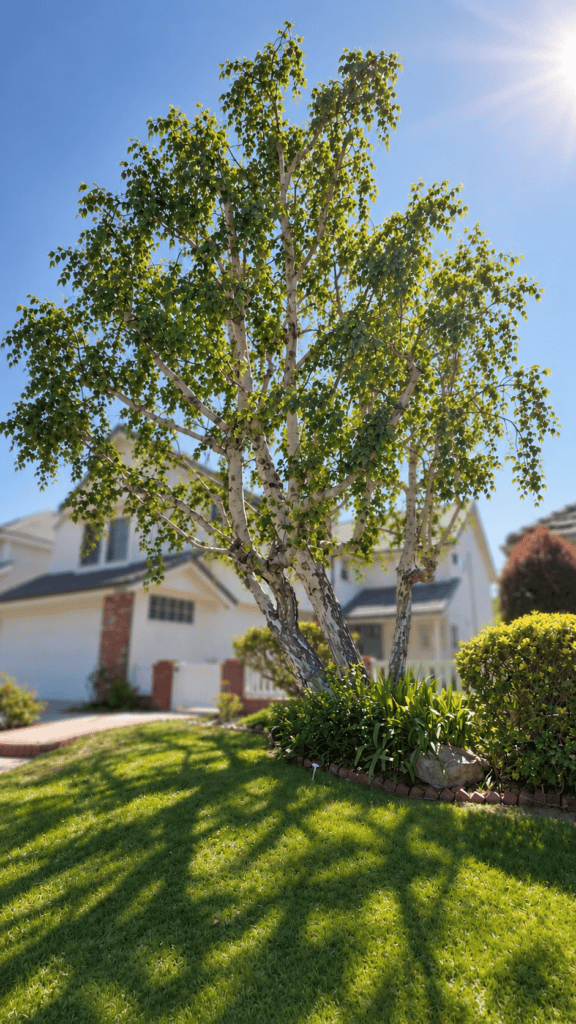
ArborNote’s Tree of the Week was selected by our customer support wiz, Michele! She has chosen the Silver Birch Tree (Betula pendula). It is instantly recognizable for its striking white bark marked with dark, irregular patches, delicate branching, and small leaves that create a light, airy canopy. Native to Europe and parts of Asia, silver birches naturally grow in cooler forests and open woodland. They are considered pioneer trees because they are among the first trees to colonize disturbed or open land. Although they can reach roughly 40–70 feet tall, ornamental specimens are often smaller, particularly when grown as multi-trunk trees. One of the most interesting features of birches is their bark. The brilliant white coloration comes largely from betulin, a naturally occurring compound in the bark. The white surface reflects sunlight and may help protect the trunk from temperature fluctuations. As the tree matures, its bark develops the contrasting dark fissures and markings that give older birches so much character. Birches also have a long cultural history. In parts of northern Europe, they became associated with renewal and new beginnings, partly because birches readily establish themselves after land has been cleared or disturbed. Their bark has historically been used for everything from writing surfaces and containers to roofing and fire-starting material.